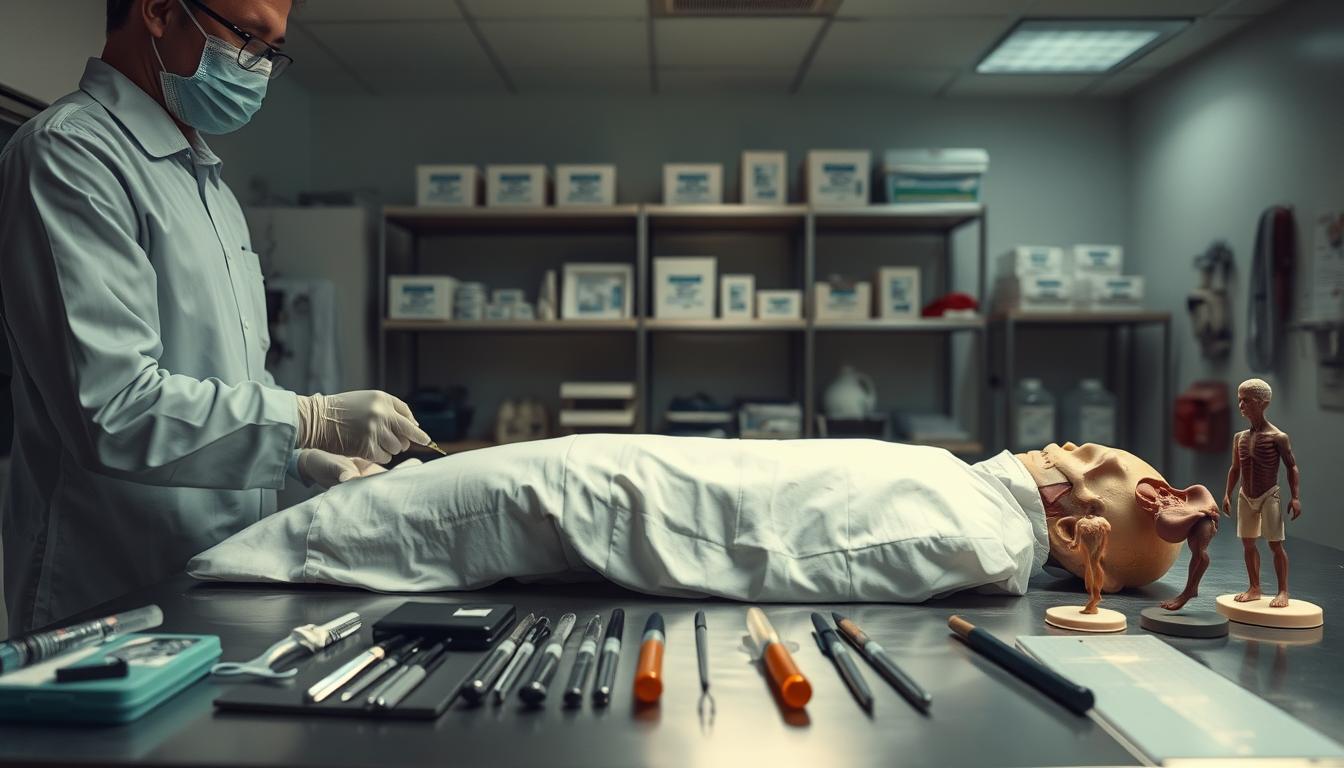
The process of embalming has been a cornerstone of funeral practices for centuries, allowing families to pay their respects to loved ones in a dignified manner.
As part of death care, embalming involves preserving the body to delay natural decay, enabling viewing and visitation during funerals. This practice not only provides a sense of closure for grieving families but also allows for a more traditional and personalized farewell.
Understanding the intricacies of embalming can help individuals make informed decisions regarding funeral arrangements, ensuring that the deceased is honored according to their wishes.
The Definition and Purpose of Embalming
Embalming is a multifaceted process aimed at preserving the body of the deceased, ensuring it remains presentable for viewing and funeral services. This process is crucial in mortuary science, as it allows families to pay their respects in a dignified manner.
What Is Embalming?
Embalming is a preservation technique that involves treating the deceased body with chemicals to delay natural decomposition. This process not only preserves the body but also sanitizes it, making it safe for handling during funeral rites.
Primary Objectives of the Embalming Process
The primary objectives of embalming include preserving the body, restoring a natural appearance, and ensuring the deceased is presented in a dignified manner. These objectives are achieved through a combination of arterial embalming and cavity embalming techniques.
Sanitization and Preservation
Sanitization and preservation are critical components of the embalming process. Embalming fluids contain disinfectants and preservatives that prevent the spread of infection and delay decomposition. The table below outlines the key components of embalming fluids and their functions.
| Chemical Component | Function |
|---|---|
| Formaldehyde | Preserves tissues and prevents decay |
| Disinfectants | Kill bacteria and other pathogens |
| Preservatives | Delay natural decomposition processes |
By understanding the definition and purpose of embalming, we can appreciate its significance in funeral practices and mortuary science. Embalming not only provides a means to honor the deceased but also ensures a safe environment for those mourning.
Historical Evolution of Embalming Practices
From ancient rituals to modern techniques, the evolution of embalming practices is a story of innovation and adaptation. The history of embalming is deeply intertwined with the cultural, religious, and scientific developments of human societies.
Ancient Egyptian Mummification
The earliest recorded evidence of embalming dates back to Ancient Egypt, around 3000 BCE. Egyptians believed that preserving the body was crucial for ensuring the deceased person's Ka (spirit) could return. Their sophisticated mummification techniques involved:
- Removing internal organs, including the brain, liver, lungs, and intestines, which were preserved separately.
- Treating the body with natron to dehydrate the flesh.
- Wrapping the body in linen bandages, often coated with resin.
This elaborate process not only preserved the body but also provided a means for the deceased to be recognized in the afterlife.
Development Through the Middle Ages
As civilizations rose and fell, embalming practices evolved. During the Middle Ages, embalming continued, particularly for nobility and clergy. Techniques became more sophisticated, with the use of various substances to preserve the body.
Modern Embalming's Civil War Origins
In the United States, modern embalming as we know it today gained prominence during the Civil War. The need to preserve bodies for transportation back to their families led to significant advancements in embalming techniques.
20th Century Advancements
The 20th century saw significant advancements in embalming, with the introduction of formaldehyde-based preservatives. These chemicals greatly improved the efficacy and safety of embalming, making it a standard practice in the funeral industry.
The evolution of embalming practices reflects a blend of tradition, science, and cultural influences. Understanding this history provides insight into the complex role embalming plays in modern funeral practices.
When Embalming Is Necessary or Recommended
Understanding when embalming is necessary or recommended involves examining legal requirements, funeral practices, and the transportation of the deceased. Embalming is not always required, but certain circumstances make it a practical or legal necessity.
Legal Requirements in the United States
In the U.S., legal requirements for embalming vary by state. Generally, embalming is required if the deceased will be transported across state lines or if there will be a viewing or visitation. Some states mandate embalming under specific circumstances, such as when the body is to be held for more than a certain number of days.
Viewing and Funeral Considerations
Embalming is often chosen for viewing and funeral services to restore a natural appearance to the deceased, providing a sense of closure for the family and friends. It allows for a more traditional funeral service where the body is present.
Transportation of the Deceased
Transportation regulations also play a significant role in the decision to embalm. For international or long-distance transport, embalming may be required to prevent decomposition during transit.
Medical and Scientific Purposes
Embalming is sometimes chosen for medical or scientific purposes, such as when a body is donated to science. In these cases, embalming helps preserve the body for educational and research purposes.
The Embalming Process: Step-by-Step
Embalming involves a series of meticulous steps to preserve the deceased. This process is crucial for maintaining a lifelike appearance, especially during viewings or when transporting the body.
Initial Assessment and Preparation
The embalming process begins with an initial assessment of the deceased. This involves evaluating the condition of the body, noting any trauma or decomposition, and determining the best approach for embalming. Preparation is key to a successful embalming. The body is washed and disinfected, and any necessary repairs or restorations are identified.
Arterial Embalming Technique
Arterial embalming is the primary method used to preserve the body. It involves injecting a preservative solution into the arterial system to replace the blood and prevent decay. The embalmer accesses the arterial system through a major artery, typically in the neck or lower limbs, and injects the embalming fluid using a specialized machine. The fluid distributes throughout the body, preserving tissues and preventing bacterial growth.
Cavity Embalming Procedure
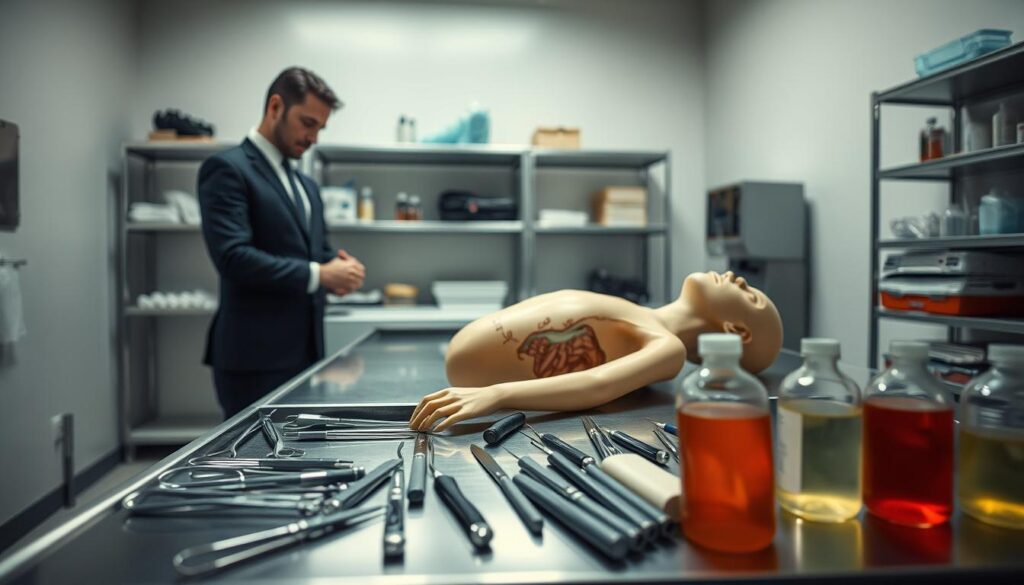
Cavity embalming involves treating the internal organs to prevent decay. A trocar, a long, hollow instrument, is used to aspirate the contents of the abdominal and thoracic cavities. The cavities are then treated with a strong preservative to prevent gas formation and decomposition.
Final Preparations and Cosmetic Work
After arterial and cavity embalming, the body undergoes final preparations. This includes washing and styling the hair, applying cosmetics to restore a natural appearance, and dressing the body in attire chosen by the family. The goal is to present the deceased in a dignified and lifelike manner.
| Embalming Step | Purpose | Key Actions |
|---|---|---|
| Initial Assessment | Evaluate body condition | Examine body, note trauma or decomposition |
| Arterial Embalming | Preserve tissues, prevent decay | Inject preservative solution into arterial system |
| Cavity Embalming | Prevent internal decay | Aspirate cavity contents, treat with preservative |
| Final Preparations | Restore natural appearance | Apply cosmetics, style hair, dress the body |
By following these steps, embalmers can ensure that the deceased is presented in a respectful and lifelike manner, providing closure for grieving families.
Chemicals and Solutions Used in Modern Embalming
The chemicals used in modern embalming are diverse and play a crucial role in preserving the deceased. These chemicals can be categorized into several types based on their functions.
Formaldehyde-Based Preservatives
Formaldehyde-based preservatives are the most commonly used chemicals in embalming. They are effective in preventing decay and are usually mixed with other chemicals to enhance their preservative qualities. Formaldehyde is a potent disinfectant and preservative, making it ideal for embalming.
Disinfectant and Germicidal Agents
Disinfectants and germicidal agents are used to reduce the risk of infection and contamination. These chemicals are crucial in maintaining a safe environment for funeral professionals and mourners.
Modifying Agents and Additives
Modifying agents and additives are used to alter the physical and chemical properties of the body. They can help restore a natural appearance to the deceased, making them more presentable for viewing.
Recent Developments in Embalming Chemistry
Recent advancements in embalming chemistry have led to the development of more environmentally friendly and less toxic alternatives to traditional embalming fluids. These innovations aim to reduce the environmental impact of embalming while maintaining its effectiveness.
The use of these chemicals requires careful handling and adherence to safety protocols to minimize risks to funeral professionals and the environment.
Tools and Equipment of the Embalming Trade
The embalming process relies heavily on specialized tools and equipment to ensure a thorough and safe preparation of the deceased. These tools are designed to facilitate various aspects of the embalming process, from initial preparation to final cosmetic touches.
Embalming Tables and Operating Surfaces
Embalming tables are a crucial piece of equipment, providing a stable surface for the embalming process. These tables are typically made of stainless steel or other durable materials that can withstand the rigors of frequent use and cleaning.
Injection and Drainage Apparatus
Injection and drainage apparatus are used to distribute embalming fluids throughout the body and to remove blood and other fluids. These devices are critical for achieving thorough preservation and preventing decay.
Specialized Instruments and Trocar
Embalmers use a variety of specialized instruments, including scalpels, forceps, and trocars, to perform the embalming procedure. A trocar, for example, is a long, hollow needle used for aspirating body cavities and injecting preservative fluids.
Safety and Sanitation Equipment
Safety and sanitation are paramount in the embalming process. Embalmers use personal protective equipment (PPE), including gloves, masks, and eye protection, to prevent exposure to potentially hazardous materials.
- Gloves
- Masks
- Eye protection
These measures ensure a safe working environment and prevent the spread of infection.
The Science Behind Embalming
Understanding the science of embalming requires knowledge of the biological processes that occur after death and how they are mitigated. When a person dies, their body undergoes significant changes due to the cessation of biological functions.
Biological Processes After Death
After death, the body begins to decompose due to autolysis, where enzymes break down tissues, and putrefaction, driven by bacterial action. Embalming aims to slow down these processes.
How Preservation Chemicals Work
Preservation chemicals, such as formaldehyde, work by cross-linking proteins and killing bacteria, thus preventing decay. These chemicals are crucial in maintaining the body's integrity.
Tissue and Cellular Changes
During embalming, tissues and cells undergo changes due to the introduction of preservation chemicals. This process helps in maintaining a lifelike appearance.
Factors Affecting Embalming Efficacy
Several factors can affect the efficacy of embalming, including the condition of the body, the type of chemicals used, and the skill of the embalmer. Understanding these factors is crucial for successful embalming.
The Role of Professional Embalmers
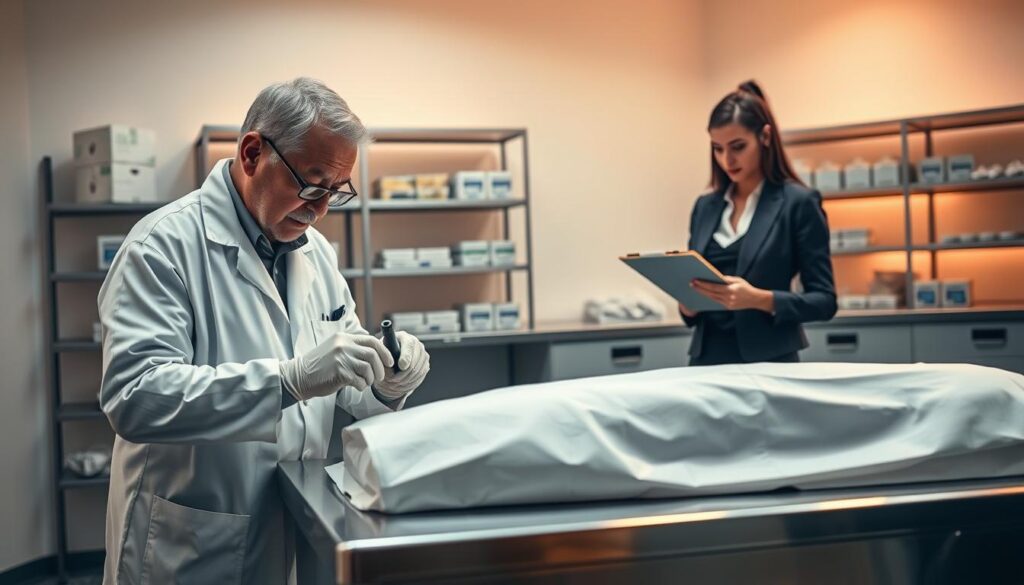
With the responsibility of preserving the deceased, professional embalmers must undergo comprehensive training and adhere to strict standards. This ensures that they are equipped to handle the complexities of their role with dignity and respect.
Educational Requirements and Training
To become a licensed embalmer, one must complete a program in mortuary science approved by the American Board of Funeral Service Education. These programs combine classroom instruction with practical experience, covering subjects such as anatomy, chemistry, and restorative arts.
Licensing and Certification Process
Licensing requirements for embalmers vary by state, but typically involve passing the International Conference of Funeral Service Examining Boards (ICFSEB) exam. Certification is also available through professional organizations, demonstrating expertise in specific areas of funeral service.
Continuing Education Requirements
To maintain their licensure, embalmers must complete continuing education courses, staying updated on the latest techniques, chemicals, and regulations. This ensures they remain proficient in their craft.
Professional Organizations and Standards
Professional organizations, such as the National Funeral Directors Association (NFDA) and the American Board of Funeral Service Education (ABFSE), set standards for the industry, providing resources for education, advocacy, and networking among professionals.
Cultural and Religious Perspectives on Embalming
Cultural and religious perspectives on embalming are as diverse as they are complex, influenced by historical, spiritual, and societal factors. Embalming, as a practice, has been shaped by various cultural and religious beliefs, resulting in a wide range of attitudes and customs surrounding death and mourning.
Christian Views and Practices
In Christianity, views on embalming vary among different denominations. Some Christian traditions embrace embalming as a way to preserve the body for viewing and funeral services, while others may not have specific prohibitions or requirements regarding the practice.
Jewish and Muslim Traditions
In Jewish and Muslim traditions, embalming is generally discouraged or prohibited. In Judaism, for instance, the body is typically buried as soon as possible without embalming, reflecting the importance of treating the deceased with respect and dignity. Similarly, in Islam, embalming is not commonly practiced; instead, the body is washed and wrapped in a simple shroud before burial.
Eastern Religious Perspectives
Eastern religions such as Hinduism and Buddhism have their own distinct views on embalming. In Hinduism, for example, cremation is the preferred method of handling the deceased, and embalming is not typically practiced. Buddhist traditions also generally favor cremation, although practices can vary widely across different Buddhist cultures.
Secular and Humanist Approaches
Secular and humanist approaches to death and mourning often focus on personal preference and cultural context. In some secular societies, embalming may be chosen for cosmetic reasons or to allow for viewing, while in others, it may be seen as unnecessary or even objectionable.
| Religion/Culture | View on Embalming | Common Practices |
|---|---|---|
| Christianity | Varies by denomination | Embalming for viewing and funeral services |
| Judaism | Generally discouraged | Prompt burial without embalming |
| Islam | Prohibited | Washing and shrouding before burial |
| Hinduism | Not typically practiced | Cremation |
| Buddhism | Varies, but cremation is common | Cremation |
Ethical and Environmental Considerations
As we explore the intricacies of embalming, it's crucial to consider the ethical and environmental implications. Embalming, a practice with a long history, is not without its controversies and challenges.
Informed Consent Issues
One of the significant ethical considerations is the issue of informed consent. Families and individuals may not always be fully aware of the embalming process, its purposes, or its potential environmental impacts. Transparency in explaining these aspects is essential for ethical practice.
Environmental Impact of Embalming Chemicals
The chemicals used in embalming, such as formaldehyde, have raised concerns due to their potential environmental and health impacts. These chemicals can contaminate soil and water if not disposed of properly.
Dignity and Respect for the Deceased
Maintaining the dignity and respect for the deceased is a paramount ethical consideration. Embalmers must balance the need for preservation with the need to treat the body with respect and care.
Professional Ethics for Practitioners
Professional embalmers are guided by a code of ethics that includes respect for the deceased, confidentiality, and a commitment to safe and sanitary practices. Continuing education is crucial for embalmers to stay updated on best practices and ethical standards.
| Ethical Consideration | Description | Best Practice |
|---|---|---|
| Informed Consent | Ensuring families understand the embalming process | Clear, transparent communication |
| Environmental Impact | Minimizing the ecological footprint of embalming | Proper disposal of chemicals, eco-friendly alternatives |
| Dignity and Respect | Treating the deceased with dignity | Respectful handling and preparation |
| Professional Ethics | Adhering to a code of ethics | Continuing education, adherence to industry standards |
The Future of Embalming and Alternative Practices
The funeral industry is witnessing a significant shift in consumer preferences, driven by changing societal values and growing environmental concerns. As a result, the future of embalming is likely to be shaped by emerging trends and alternative practices.
One of the key trends influencing the future of embalming is the increasing demand for eco-friendly funeral options. This has led to the development of alternative preservation methods that are more environmentally sustainable. For instance, some funeral homes are now using dry ice or eco-friendly embalming fluids that reduce the environmental impact.
The rise of alternative funeral practices, such as home funerals and green burials, is also impacting the traditional embalming process. These practices often involve minimal or no embalming, instead focusing on natural decomposition and biodegradable materials.
As the funeral industry continues to evolve, it is likely that embalming will adapt to incorporate new technologies and practices that balance traditional funeral rites with modern environmental and social concerns. Understanding these funeral industry trends is crucial for funeral homes and professionals looking to stay ahead of the curve.
FAQ
What is embalming, and why is it performed?
Embalming is the process of preserving a deceased body to delay its natural decay, typically to allow for viewing or funeral services. It is performed to maintain a lifelike appearance and prevent the spread of disease.
Is embalming required by law in the United States?
Embalming is not always required by law in the United States, but it may be necessary under certain circumstances, such as when the body is to be transported across state lines or repatriated.
What chemicals are used in the embalming process?
Formaldehyde-based preservatives, disinfectants, and modifying agents are commonly used in embalming. The specific chemicals and solutions used may vary depending on the embalmer and the circumstances.
How long does the embalming process typically take?
The embalming process can take several hours, depending on the complexity of the case and the techniques used. Factors such as the condition of the body and the level of preparation required can influence the duration.
Can embalming be performed on bodies that have undergone an autopsy?
Yes, embalming can be performed on bodies that have undergone an autopsy, although it may be more challenging due to the presence of incisions and potential tissue damage.
Are there any cultural or religious objections to embalming?
Yes, some cultures and religions have specific views or prohibitions regarding embalming. For example, some Jewish and Muslim traditions discourage or prohibit embalming, while others may have specific requirements or recommendations.
What is the role of a professional embalmer?
A professional embalmer is responsible for preparing the deceased for viewing or burial, using techniques such as embalming, restoration, and cosmetic work to maintain a lifelike appearance.
How has embalming evolved over time?
Embalming has evolved significantly over time, influenced by advances in technology, changes in societal values, and the development of new techniques and chemicals.
Are there any environmental concerns associated with embalming?
Yes, embalming chemicals can have environmental impacts, such as contaminating soil and groundwater. Efforts are being made to develop more environmentally friendly embalming practices and alternatives.
What are some alternatives to traditional embalming?
Alternatives to traditional embalming include green burial, alkaline hydrolysis, and other eco-friendly funeral practices that aim to reduce the environmental impact of death care.